Client Portal Adoption in Home Care: Why Portals Fail & How to Fix It
The Challenge of Client Portal Adoption in Home Care
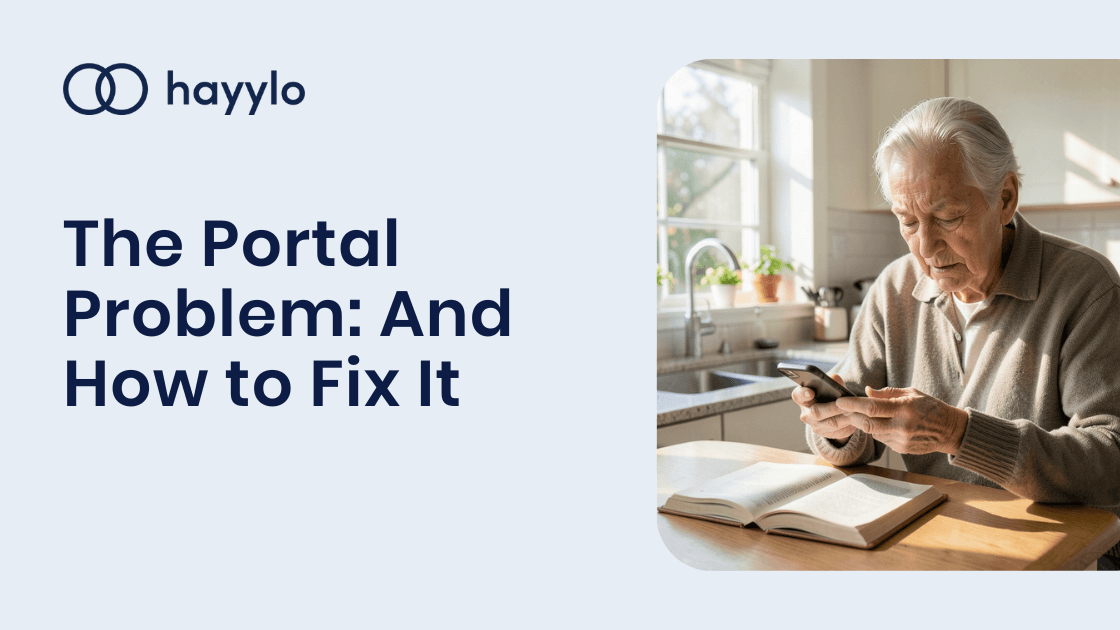
For many providers, client portal adoption in home care remains a significant hurdle. While we know that keeping families informed is critical, the data shows that traditional, "passive" portals typically hover between just 15% and 25% adoption. They simply ask too much of the user. For an older client under the CHSP or a busy family navigating the NDIS, the friction--remembering URLs, email addresses, and complex passwords--is an immediate dealbreaker.
Active vs. Passive: Improving Client Portal Adoption in Home Care
To effectively drive higher levels of client portal adoption in home care, providers must shift from passive tools to active self-service. You cannot rely on a single, friction-heavy digital doorway. Instead, an omnichannel approach--combining branded Apps, conversational SMS, and automated Voice--reaches clients where they are.
How Hayylo removes the barriers:
No More Passwords: Uses secure SMS one-time codes (OTP).
Frictionless Entry: Automated enrollment means clients are connected from day one.
Proactive Outreach: Pushing updates to clients rather than waiting for them to log in.
The Impact of Active Self-Service on Adoption
When you remove technical barriers, client portal adoption in home care metrics transform. Our data shows leading providers see engagement rates that traditional portals simply cannot match:
50% - 65% App Adoption: Driven by a simplified, intuitive user experience.
75% - 80% SMS Adoption: Highly effective for CHSP, and Support at Home clients who prefer to reply naturally to a text.
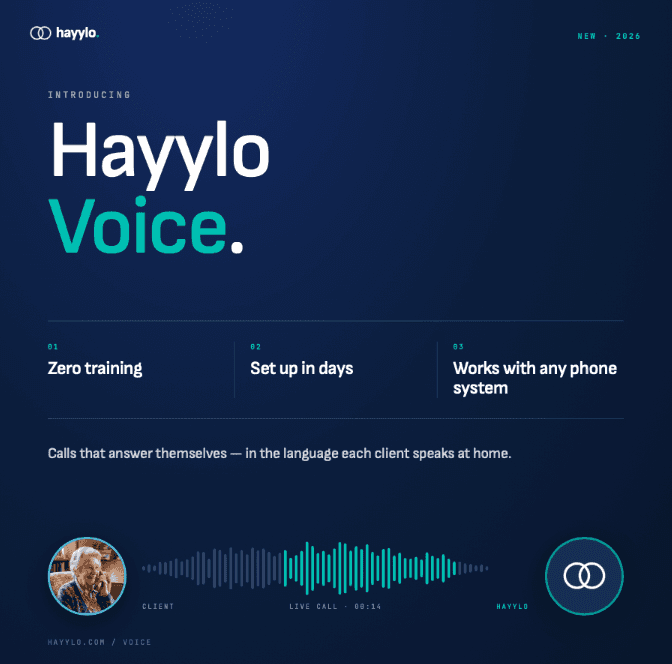
95%+ Voice Adoption: For clients who prefer the phone, automated voice assistants provide immediate answers using conversations.
The Bottom Line: Better Care, 50% Fewer Calls
By prioritising client portal adoption in home care through Hayylo's active, omnichannel model, providers do more than just improve the client experience--they fundamentally change their operational efficiency, resulting in up to a 50% reduction in inbound call volumes and massive uplift in increased capacity or cost savings for operations.